

PicDrop vs Pixieset: Two tools built for completely different jobs
At first glance, comparing PicDrop and Pixieset means comparing two online galleries for photographers. At second glance, they are two products answering different questions.
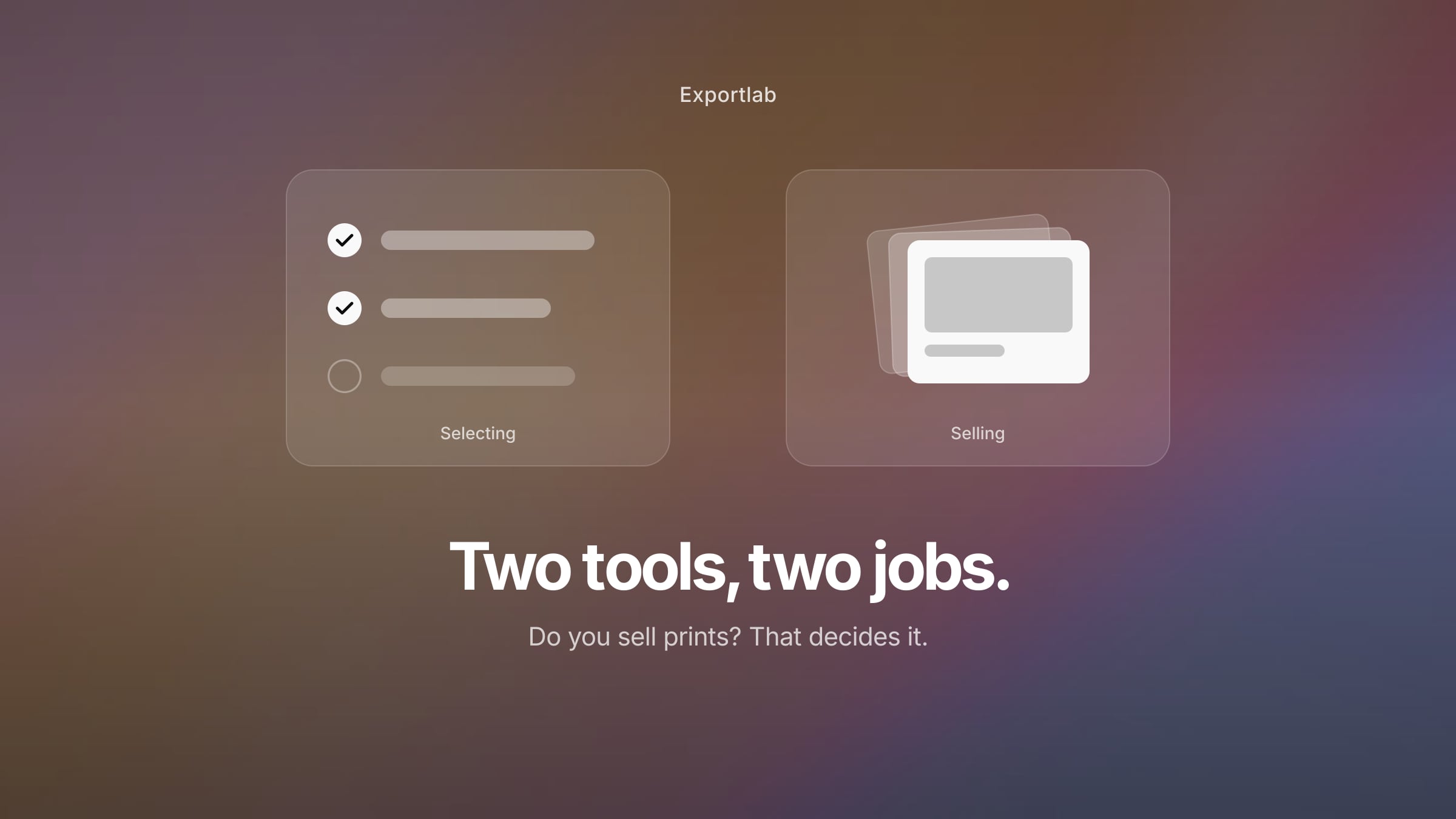
PicDrop is a proofing tool: upload fast, let the client select, pull the selection. Pixieset is a sales platform: a beautiful gallery with an integrated store, a website builder and studio management around it.
So the decision hangs less on feature lists than on a single question: do you sell prints?
The comparison at a glance
| PicDrop | Pixieset | |
|---|---|---|
| Based in | Germany | Canada |
| Focus | proofing & fast turnaround | gallery, store & website |
| Free plan | 1 GB, 3 galleries | 3 GB, unlimited galleries |
| Paid entry | €14.99 net/month (Pro) | ~$10/month (Basic) |
| Print store | no | yes, built in |
| Commission on free tier | — | 15 % on store sales |
| RAW upload | yes, all plans | yes, Pro/Ultimate only |
| Video | from Pro, conversion minutes capped | upload minutes by plan |
| Website builder | no | yes |
| DPA / EU servers | yes | international, clarify first |
As of August 2026. Prices and terms change — check the PicDrop and Pixieset pages before deciding.
Where PicDrop is stronger
Speed through the approval loop. PicDrop is built around one flow: upload images, send a link, client marks and comments, you pull the selection. It is less staged than Pixieset, but it is direct. Anyone running daily selection rounds — agencies, commercial photography, editorial — feels the difference.
RAW upload on every plan. With PicDrop, RAW is standard, even on the free tier. With Pixieset, RAW support is reserved for Pro and Ultimate. If you exchange RAWs with retouchers or agencies, PicDrop is the cheaper entry point.
A German provider with a DPA. For clients in healthcare, the public sector or large corporates, server location and a data processing agreement are often part of getting hired at all. PicDrop is straightforward here; with international providers you need to look closer.
No store you pay for regardless. If print sales are not part of your business, Pixieset charges you for a substantial part of the product you will never open.
Where Pixieset is stronger
The store. This is Pixieset's actual product. Every gallery doubles as a shop: clients order prints, canvases and albums directly, and connected labs handle printing and shipping automatically. For portrait and wedding photographers who treat print sales as a revenue channel, that is real leverage — PicDrop simply has no counterpart.
The presentation. Pixieset galleries look like a portfolio. Cover, typography, layout — the client gets a staged moment, not a file list. For weddings and portraits, that is part of the product.
The bigger free tier. 3 GB and unlimited galleries clearly beat 1 GB and 3 galleries. The catch: a 15 % commission on store sales while you stay on the free tier.
The wider package. Website builder, Studio Manager, mobile app. If you want everything under one roof, Pixieset covers more ground.
What neither does well
Both are photo tools. As soon as motion enters the picture, both get thin.
PicDrop offers video from the Pro plan, but with capped conversion minutes — 60 per month on Pro. And gallery playback is not the same as real video review: feedback at the right timecode, version states, approval status. Pixieset allows video uploads depending on plan, but follows the same gallery logic.
Also weak in both: the return direction. When your client needs to send you material — briefs, logos, guest photos, reference images — you end up back at WeTransfer, Dropbox or email attachments.
And for recurring business clients, both share the same pattern: one gallery link per project. Working with the same client for a third year means 30 links across 30 email threads.
That is exactly where Exportlab comes in — not as a prettier gallery, but as a workspace where selection, feedback, timecode video review, client uploads and a client portal for recurring projects sit together. There is no print store: if you live off print sales, Pixieset or Pic-Time serve you better. The wider market view is in our comparison of PicDrop alternatives.
Which tool fits which way of working?
Choose Pixieset if you shoot weddings or portraits for private clients, sell prints and albums or want to, care about a staged gallery experience, and would like website and gallery from the same provider.
Choose PicDrop if you deliver digitally to companies, agencies or editorial teams, run frequent selection rounds, exchange RAWs, need a German provider with a DPA, and have no use for a store.
Look at a third option if you deliver photo and video, regularly receive material back from clients, work with recurring business clients, or need several decision-makers in an approval flow.
FAQ: PicDrop vs Pixieset
What is the main difference between PicDrop and Pixieset?
PicDrop is built for fast proofing: upload, let clients select, download the selection. Pixieset is a sales platform with an integrated print store, website builder and studio management. PicDrop has no store; Pixieset is only half used without one.
Is Pixieset or PicDrop cheaper?
Pixieset's entry plan is nominally lower at around $10/month versus PicDrop's €14.99 net. But the comparison is misleading: PicDrop Pro includes 500 GB, Pixieset Basic includes 10 GB. Measured per gigabyte, PicDrop is considerably cheaper.
Does Pixieset support RAW files?
Yes, it has for a while — but only on the Pro and Ultimate plans, and the feature must be enabled in settings. PicDrop includes RAW upload on every plan, including the free one.
Which tool is better for wedding photographers?
Usually Pixieset, because print sales are a real revenue channel in weddings and portraits, and gallery presentation is part of the client experience. PicDrop is the better pick if you deliver digitally and sell no prints.
Which tool is better for GDPR?
PicDrop is a German provider offering a data processing agreement, which covers what most European business clients ask for. Pixieset is Canadian — for clients in clinics, law firms or the public sector, settle server location and DPA before you commit.
Can I avoid Pixieset's commission?
Yes. The 15 % commission on store sales applies only on the free tier. All paid plans sell commission-free, so regular sellers recover the plan cost quickly.
Is either tool suitable for video review?
Only partly. PicDrop offers gallery playback from Pro with capped conversion minutes; Pixieset allows video uploads depending on plan. Real video review with timecode feedback, versions and approval status is not the focus of either.
Conclusion
PicDrop and Pixieset compete less than the search query suggests. They solve different problems.
If print sales are part of your business, there is hardly a way around Pixieset — PicDrop has no answer there. If you deliver digitally to business clients, need fast selection rounds and work with RAWs, PicDrop is the more direct tool and, depending on storage needs, the cheaper one too.
And if reading this made you realise your actual problem is neither the store nor the proofing, but the number of tools between the shoot and final delivery — then the question is not PicDrop or Pixieset. It is whether a gallery is the right centre for your workflow at all.